Clinical Science Meets Luxury Wellness
Why Science-Backed Photobiomodulation Belongs on Your Spa Menu
When evaluating new wellness technology for a luxury property, hotel owners and spa directors face a sea of marketing hype. Guests arriving in 2026 are increasingly sophisticated and compare resort spa menus on demonstrated efficacy.
Photobiomodulation (PBM), the clinical term for therapeutic red and near-infrared light therapy, is backed by over 7,000 peer-reviewed studies indexed on PubMed as of August 2026 (National Library of Medicine, 2026). For hospitality executives, understanding the core research is the key to building guest trust, protecting asset value, and ensuring every session delivers a premium experience.
Here are five foundational research principles that show why science-backed light therapy is becoming an anchor service in luxury resorts.
1. Cellular Energy and Rejuvenation
In foundational cellular research, light photons in specific red and near-infrared spectrums interact with cytochrome c oxidase, a primary photoacceptor enzyme within cellular mitochondria (Karu, 1999). This interaction supports natural ATP (adenosine triphosphate) cellular energy production (Karu, 1999).
For resort guests, this delivers an effective, touchless option for soothing tired muscles, promoting post-travel relaxation, and easing minor physical tension after a long flight or an active day on the golf course.
2. The Power of Calibrated Proximity
A landmark review on photobiomodulation dose dynamics highlighted the biphasic dose response (Huang et al., 2009). In plain terms, results depend on delivering the right energy density directly at the target area, and excess light can reduce the effect (Huang et al., 2009).
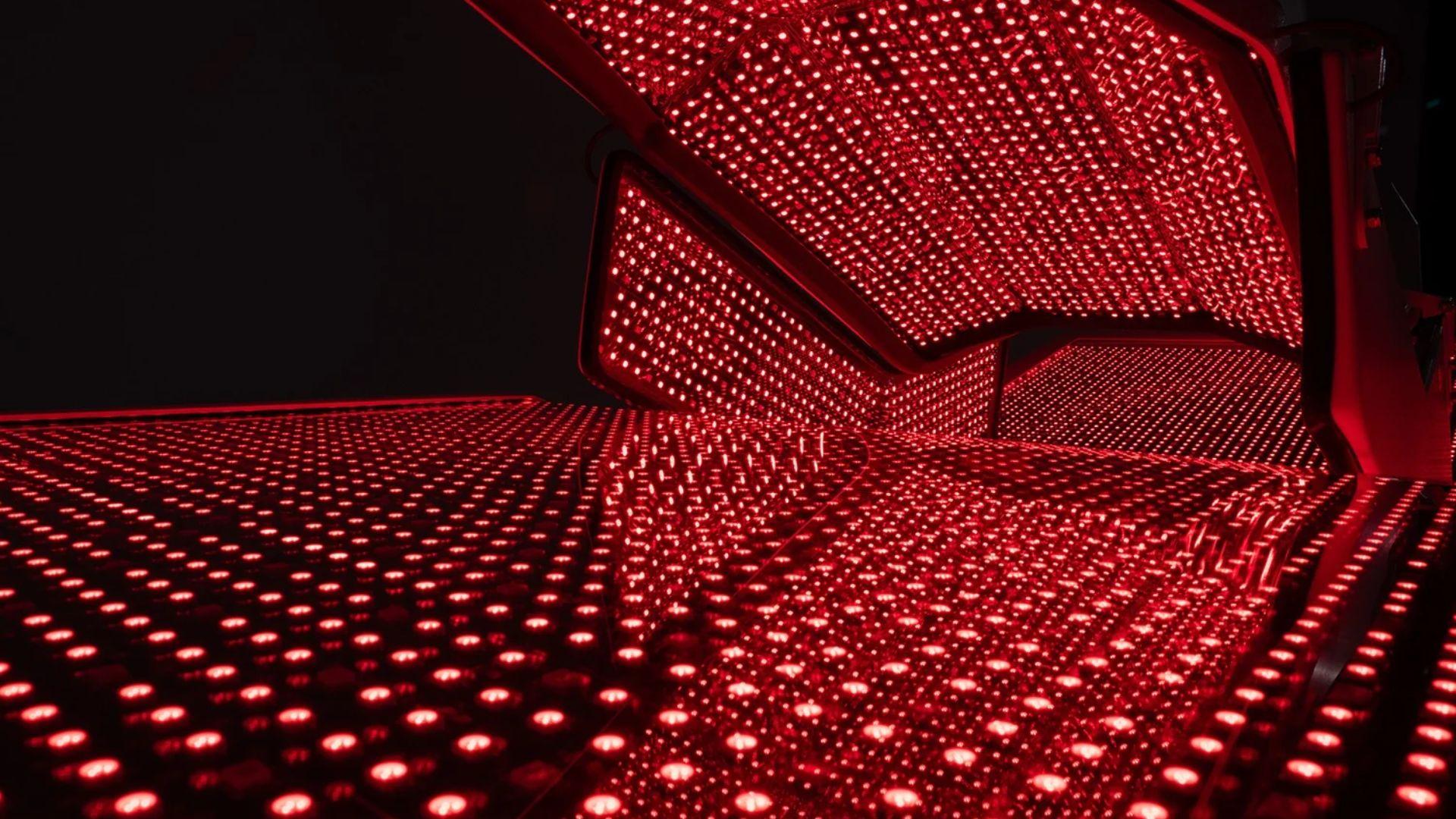
Because optical energy degrades rapidly over physical distance, equipment design matters. Commercial systems like the OvationULT and PremierRLT use a contoured, zero-gravity design to keep the light diodes within 2 to 3 inches of the body. This proximity delivers an effective 65 to 75 mW/cm² at the treatment surface, with sessions calibrated to 10, 15, or 20 minutes.
3. Dual-Wavelength Targeting
Comprehensive research synthesizes how distinct light spectrums interact with biological tissue (Hamblin, 2017):
Visible Red Light (635nm): Absorbed primarily in superficial skin layers (Hamblin, 2017).
Near-Infrared Light (805nm and 850nm): Penetrates deeper into underlying muscle tissue and connective structures (Hamblin, 2017).
By delivering 635nm visible red and 805nm/850nm near-infrared wavelengths at the same time, systems like the OvationULT and PremierRLT provide a comprehensive protocol. It supports surface wellness, muscle spasm relaxation, and deep tissue circulation in a single automated session.
4. Supporting Athletic Recovery
A comprehensive systematic review examined photobiomodulation applied to human muscle tissue before and after exercise. It documented significant benefits for delayed onset muscle soreness (DOMS) and post-exercise recovery (Ferraresi et al., 2016). Positioning light therapy in resort fitness centers, golf clubhouses, or spa recovery suites provides a touchless amenity that appeals directly to active luxury travelers looking to ease minor soreness and keep moving.
5. Responsible Marketing and Compliance
Navigating medical literature requires strict operational discipline. High-level systematic reviews emphasize the importance of maintaining proper scientific context (Brosseau et al., 2004).
For hotel operators, using FDA-registered Class II devices under product code ILY keeps marketing compliant with cleared general wellness indications. These cleared uses include topical heating for temporary relief of minor muscle and joint pain, arthritis stiffness, muscle spasm relaxation, and temporary increases in local blood circulation.
Building a Trusted Spa Service
Understanding the science allows hotel operators to position light therapy as a trusted, high-margin service. By selecting systems engineered around established research parameters, properties deliver memorable outcomes that bring guests back.
Body Balance System manufactures commercial red light therapy systems, including the OvationULT, which are assembled in its Las Vegas, Nevada facility. Its systems are backed by 13 years of commercial deployment and a 5-year warranty. They carry FDA establishment registration #3010627475, are listed under product code ILY, and hold full NRTL safety listings.
Disclaimer: Body Balance System references third-party peer-reviewed research for educational purposes only. It does not endorse these studies as its own findings. It does not claim its devices treat, cure, or diagnose any medical disease beyond their cleared FDA Class II indications for therapeutic heating and temporary relief of minor pain, muscle spasms, and local circulation support.
Ready to see the compliance documentation and ROI numbers for your property? Schedule a due-diligence consultation, or request the OvationULT spec sheet here.
References
Brosseau, L., Robinson, V., Wells, G., deBie, R., Gam, A., Harman, K., Morin, M., Shea, B., & Tugwell, P. (2004). Low level laser therapy (Classes I, II and III) for treating osteoarthritis. Cochrane Database of Systematic Reviews, (3), CD002046. https://doi.org/10.1002/14651858.cd002046.pub2
Ferraresi, C., Huang, Y. Y., & Hamblin, M. R. (2016). Photobiomodulation in human muscle tissue: an advantage in sports performance? Journal of Biophotonics, 9(11-12), 1273-1299. https://doi.org/10.1002/jbio.201600176
Hamblin, M. R. (2017). Mechanisms and applications of the anti-inflammatory effects of photobiomodulation. AIMS Biophysics, 4(3), 337-361. https://doi.org/10.3934/biophy.2017.3.337
Huang, Y. Y., Chen, A. C., Carroll, J. D., & Hamblin, M. R. (2009). Biphasic dose response in low level light therapy. Dose-Response, 7(4), 358-383. https://doi.org/10.2203/dose-response.09-027.Hamblin
Karu, T. (1999). Primary and secondary mechanisms of action of visible to near-IR radiation on cells. Journal of Photochemistry and Photobiology B: Biology, 49(1), 1-17. https://doi.org/10.1016/S1011-1344(98)00219-X
Featured Organizations