
The Guest Who Arrives Already Satisfied: Design, Wellness, and the Journey Before the Journey
The experience doesn't begin at check-in. It begins the moment a guest books, in the email that follows, the upgrade offer they receive four days before arrival, the product waiting on their bathroom vanity, the outlet positioned exactly where they'll need it at 11 p.m. The hotels getting this right have stopped thinking in terms of touchpoints and started thinking in terms of a continuous story. One they author from the first confirmation to the final checkout.
This spring, the International Luxury Hotel Association sits down with the operators, designers, and wellness leaders writing that story, and asks them how.
Control Is the New Luxury
There's a window in every guest journey that most luxury hotels have spent years underestimating. It sits between the booking confirmation and the arrival drive. According to Robert Charlock, Director of Revenue Management at One&Only Moonlight Basin, it may be the most commercially and emotionally important moment in the entire stay.
"The pre-arrival phase here at One and Only is really a relationship-building moment, not an administrative one. It's where our trust is established, where preferences are understood, and where expectations are aligned."
The shift Charlock describes is a fundamental reframing of what personalization actually means. There is a difference, he argues, between trying to anticipate every guest's need and giving guests the tools to express what they want. One is projection. The other is respect.
"One of the biggest shifts we've seen is that control is now becoming the new luxury. Guests want agency. They want options and choices, before they arrive, not just when they're standing at the front drive."
Dan Hiza, VP of Business Development for Hospitality Upselling at Plusgrade, adds the data layer to what Charlock describes on instinct. Guests engage when they receive upgrade offers, but only when those offers are relevant, well-timed, and feel personal rather than promotional. A message inviting a solo traveler to wake up to an exclusive mountain view converts. A generic price-led upsell does not.
"Luxury guests who feel seen before they arrive, they arrive differently. More empowered. More excited."
At One&Only Moonlight Basin, that pre-arrival process has become an entire choreography. The connectivity team curates detailed itineraries around each guest's interests and pace — fly fishing, the property's private observatory, a whiskey tasting at the Moon Shack, a guided snowmobile through Yellowstone. Once finalized, those plans are shared with the on-property host before arrival, so the check-in ceremony feels continuous rather than transactional.
The result, Charlock notes, is that the on-property team is freed from logistics entirely.
"Our hosts are no longer negotiating on-site. They're focused on presence, storytelling, and emotional connection rather than transactions."
Automation belongs in this process, but only when it sounds like the property. Every communication that goes out under the One&Only name is calibrated to the brand's voice, not to a platform. The moment a guest senses a departure from the brand's register, the trust built in the pre-arrival window begins to erode.
"If it doesn't feel on-brand or on-voice, it doesn't belong in the pre-arrival process." - Robert Charlock, Director of Revenue Management, One&Only Moonlight Basin
Wellness Is No Longer a Department
Seventy-three percent of global travelers now factor wellness offerings into their hotel selection. Tammy Pahel, VP of Spa & Wellness Operations at Carillon Miami Wellness Resort, offered that figure not as a marketing point but as a structural reality. The conversation has moved past whether wellness matters. The question now is whether an operation is building it in, or bolting it on.
"Wellness isn't a department. It's in every part of your experience, from how you enter, to food and beverage, to spa, to fitness, to the guest room."
At Carillon, that philosophy has produced something closer to a wellness infrastructure than a spa program. Guests arriving after a long flight can step into a Mind Spa in the main lobby for a meditative reset before they ever reach their room. The dining menu offers a Blue Zone option sourced from pesticide-free local farms. Sleep wellness retreats incorporate AI-driven bed technology, real-time air quality monitoring, and a circuit of touchless technologies, infrared, cryotherapy, PEMF, designed around specific recovery outcomes.
Mark Zikov, Director of Acquisitions & Development at Proper Hotels, approaches the same problem from the developer's angle, which means always coming back to ROI. At Santa Monica Proper, the team converted two lower-rated adjoining rooms with connecting terraces into a full recovery suite, cold plunges, saunas, a mineral bath, and launched a wellness membership club targeting the local community, with annual dues between $6,000 and $7,000. Guests can book the suite in 30- or 60-minute increments during their stay.
"Wellness has to stop becoming an amenity, and start becoming a meaningful, revenue-generating part of the P&L."
What makes this work at the property level is not the investment in hardware but the depth of the training culture. Zikov is direct about where that culture begins: with the check-in employee who knows where the recovery suite is, knows how to describe it, and knows how to offer it to a guest whose room won't be ready for two hours after a transatlantic flight.
On the product side, Matt Smidt, Co-Founder & CCO of OliOli, describes the bathroom as one of the most underestimated touchpoints in the wellness story. OliOli's approach, a layered scent strategy, curated Pantones calibrated for tranquility, intentional packaging designed to reduce visual clutter, is built on the idea that the best amenities don't announce themselves. They become part of the ritual.
"You want guests to leave feeling a sense of bliss and relief, not arriving overstimulated and leaving the same way."
Kelleye Martin, Spa Director at The Houstonian Hotel, Club & Spa, offers a clear commercial proof point: guests who purchase a product and take it home are 75% more likely to return. The scent alone drives a 63-65% likelihood of return visit. Wellness, when done correctly, is not a cost center. It's a retention mechanism.
Looking ahead, Pahel sees the field moving into integrative and functional medicine, blood panels, lifestyle diagnostics, proactive health design, positioning resorts not just as retreats but as genuine contributors to long-term guest health. Wellness programming is no longer something you add to an existing hotel. It's something you design into it from the beginning.
The Room Has One Job
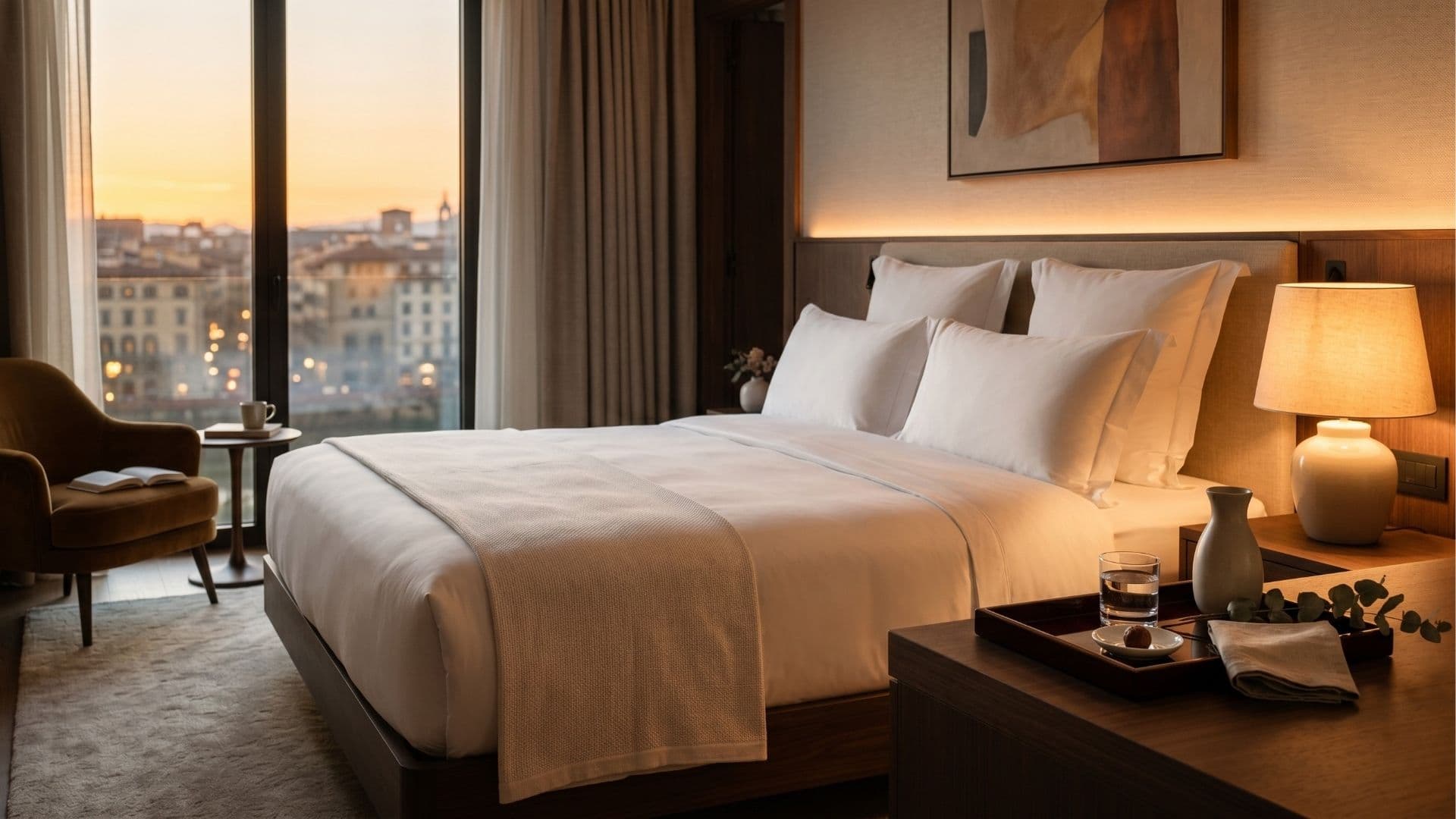
A luxury guest room has one job. Not to impress on first glance, though it should. Not to showcase what the brand spent on it, though that's evident. Its job is to make the guest feel, from the moment they step inside, that the space was designed specifically for them. Not through excess. Through intention.
That's the premise Frank Boardman, Principal of Mittman Hospitality, Matthew O'Maley, Senior Director of Procurement, Projects & Design at La Estancia, and designer Miriam Torres of Parker Torres Design bring to this conversation, and it cuts against some of the assumptions that have accumulated around what luxury is supposed to look like.
The conversation crystallizes around a single principle O'Maley describes as luxury's core: time and space. A luxury guest room is not a showcase. It's an environment. Its success is measured not by what guests notice, but by what they never have to think about.
That starts with the entry sequence. A well-designed room answers every question the arriving guest has before they ask it, where to set things down, how the space is oriented, what the bed and bathroom anchor. Visual hierarchy is not a design concept in this framing. It's hospitality. Hesitation is a failure.
Technology belongs in this conversation, but only when it's invisible. The best integrations are the ones guests never identify as technology at all, power exactly where behavior happens, lighting controls that work from bed, a closet that illuminates properly when opened. Boardman points to headboard design as a frontier: when furniture, connectivity, and lighting function as a single resolved system, the room stops requiring the guest to figure anything out.
What the session reveals most clearly is a shared conviction that restraint is now the truest signal of luxury. Rooms burdened with visible tech infrastructure or gestures toward abundance that create visual noise are rooms that ask something of the guest. The guest shouldn't have to work.
"A luxury guest room has one job: to make the guest feel like the space was designed specifically for them. Not through excess but through intention."
The operators getting this right understand that the next generation of luxury travelers will pay for rooms that meet them at their own standard of living, and exceed it in ways they didn't know to ask for.
The Standard That Hasn't Changed
Across all three conversations, the ambition is the same one it has always been. The guest who arrives already satisfied because someone took the time to understand what they wanted before they got there. The guest who recovers, sleeps, and leaves better than they arrived. The guest who walks into a room and feels, without knowing why, that it was made for them.
The tools available to deliver that have expanded considerably. The standard has never moved.
Featured Organizations






Related Articles
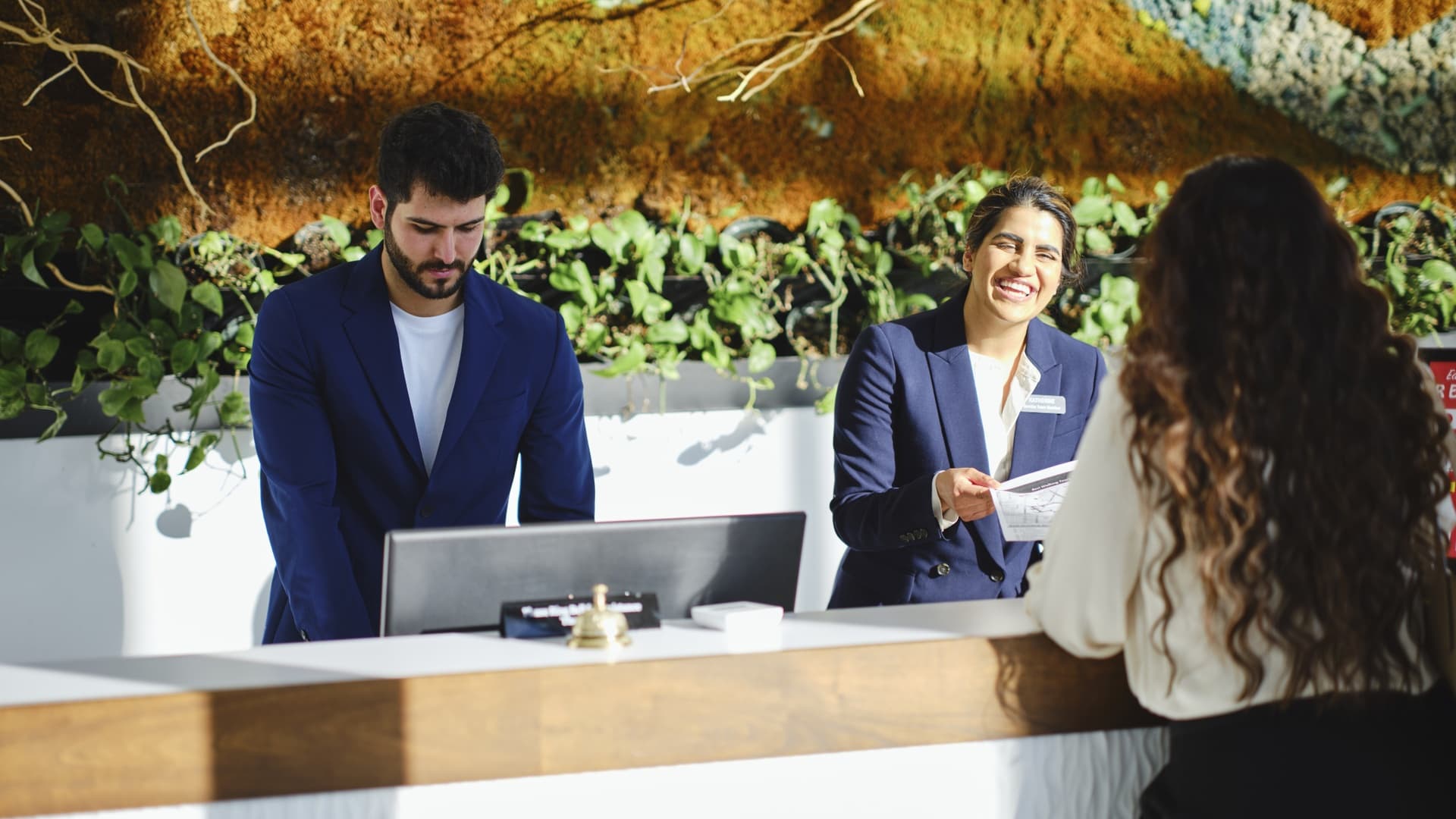
How Amadeus and HyperGuest Are Reshaping Leisure Hotel Distribution
October 2026
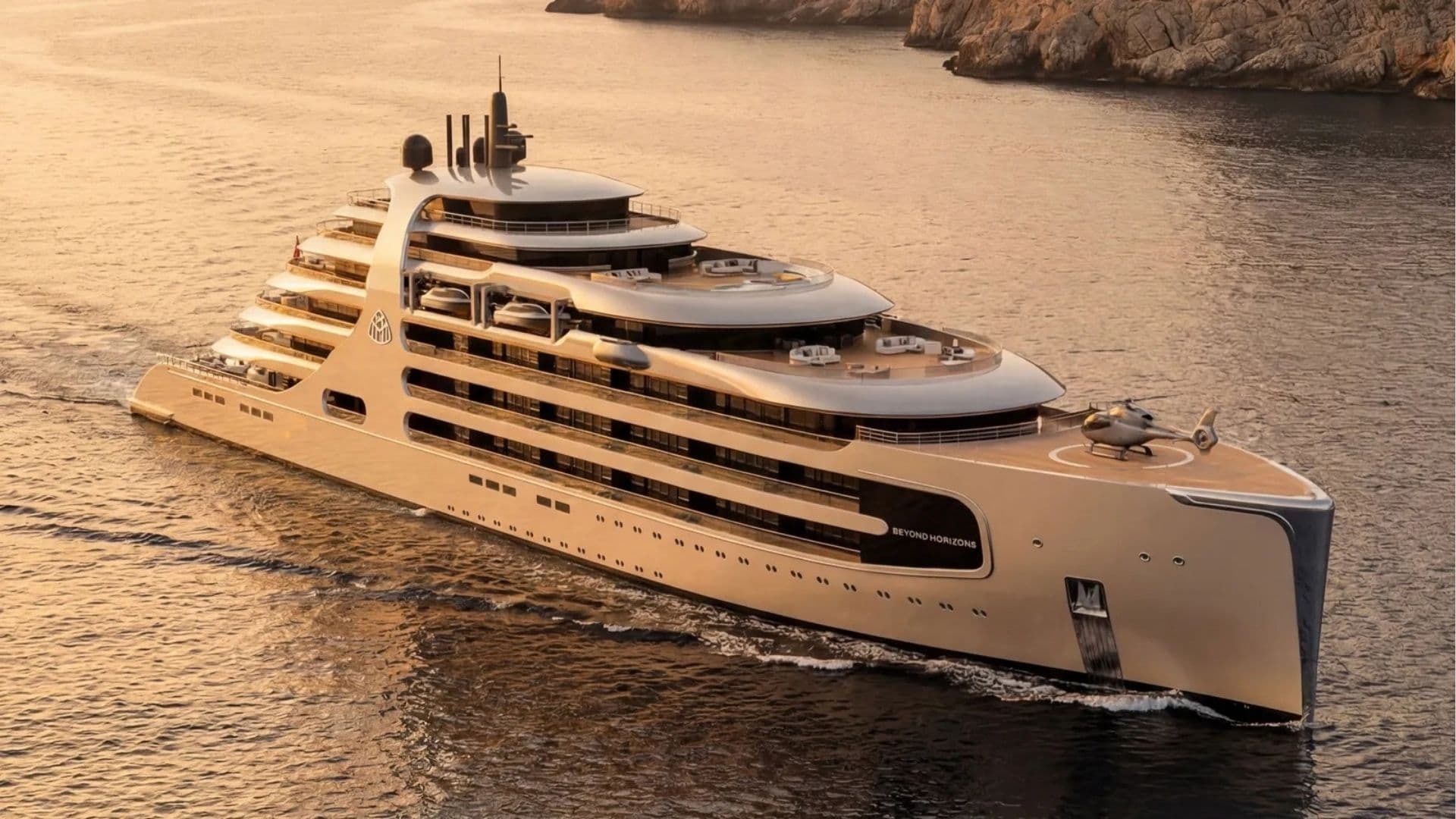
Spotlight ON: Christian Glauser Benz, Senior Advisor & Brand Ambassador at Maybach Ocean Club
October 2026
7 F&B Budget Priorities to Turn Your Hotel F&B From Amenity to Main Revenue Driver in 2027
September 2026