
The Hospitality Blind Spot: Why Properties Can’t Afford to Ignore Cellular Connectivity
Senior asset managers and investors are reframing how digital infrastructure gets budgeted and the cost of getting it wrong is compounding
For most hotel owners, connectivity sits where it has always sat: somewhere in G&A, reviewed infrequently, and subordinate to the line items that command real attention. That positioning is generating a specific, recurring, and expensive problem; one that the industry has documented, discussed, and continued to repeat.
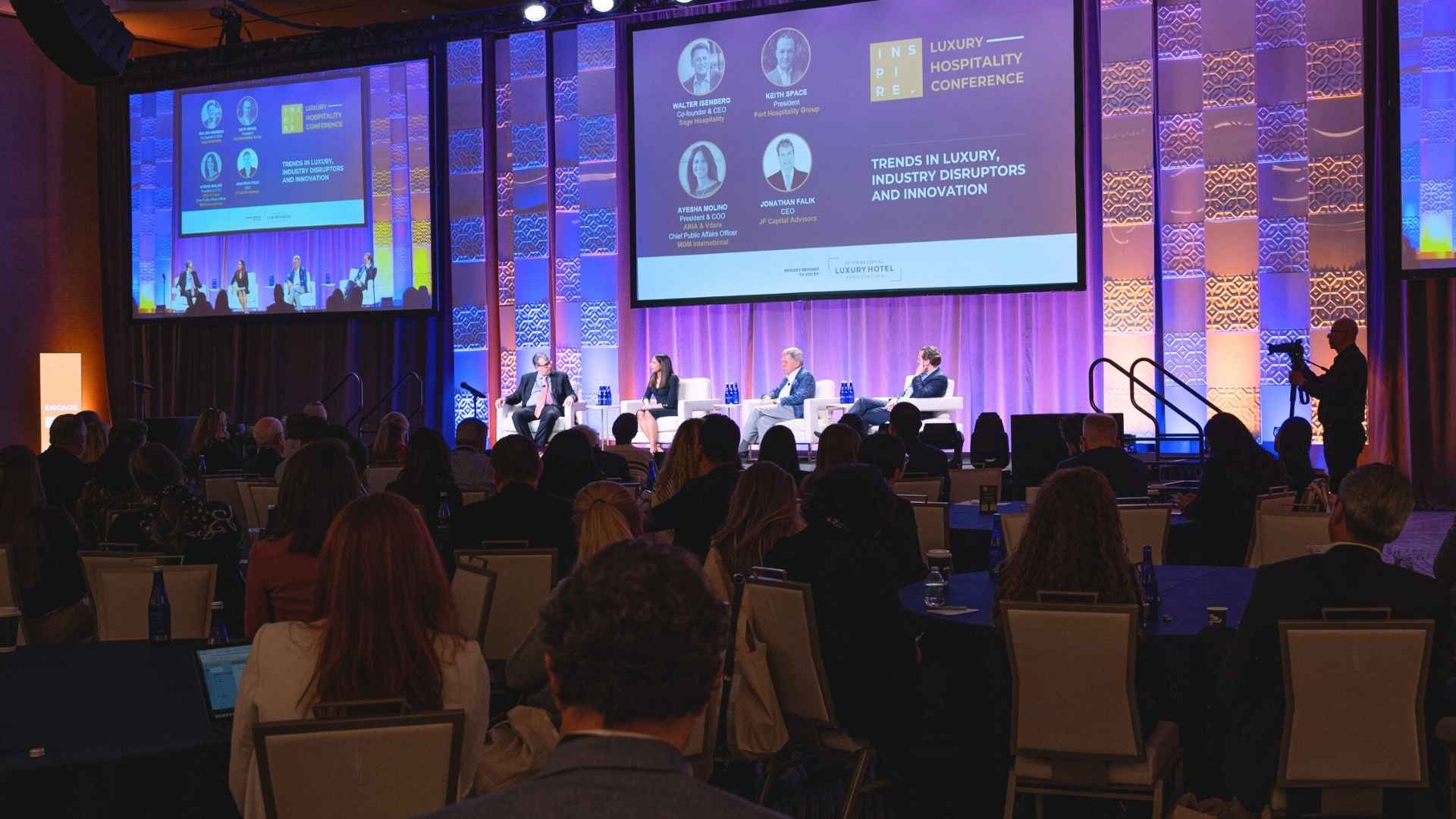
In May 2026, ILHA convened a closed advisory committee in partnership with Strategic Venue Partners, bringing together senior asset managers, investors, and technology consultants to examine how connectivity infrastructure is being prioritized and where the decision-making is consistently breaking down.
The findings were direct. And the most consequential one had nothing to do with technology. It had to do with timing.
The Window That Keeps Getting Missed
The pattern is well established. During new construction, in-building cellular infrastructure is deprioritized. Competing budget items take precedence. The building reaches completion. Coverage is inadequate. Remediation begins, at two to three times the cost of what proactive installation would have required.
Matt Baio of Xenios Group, a technology consultant with 30 years in the industry including senior roles at Marriott, described it as a consistent failure across his client base: "The building goes up and they realize they've made a tremendous mistake, and they have to put it in after the fact. It's many, many times more expensive to do cellular augmentation after the fact than it is during construction. And it still happens regularly, very regularly."
The committee cited a recent luxury development that reached 75% completion - with units already sold - before the cellular oversight was identified. The coverage was effectively unusable. The remediation was costly, disruptive, and entirely avoidable.
Why the Window Keeps Getting Missed
The committee identified several structural conditions that allow a known, expensive problem to repeat across ownership groups and construction cycles.
The most significant: technology does not surface where ownership attention is concentrated.
Jonas Niermann, SVP of Investments at Driftwood Capital, was candid about how connectivity registers at the ownership level:
"Technology just isn't front of mind for everyone in the space as much as it deserves. Where it sits on the hotel P&L, it's sort of hidden, always a comparatively small number. It doesn't really get attention. Sometimes it's just blended in with G&A and people don't think about it at all when reviewing financials."
Two additional factors compound this. The FF&E refresh cycle - historically six to eight years for hard goods - has never been synchronized with a technology refresh cadence, leaving connectivity investments without a natural review trigger. And for branded properties, brand standards often determine both the technology selected and the solution partner, reducing the owner's direct involvement in the decision and therefore their awareness of the stakes.
What Is Actually at Risk
The cost of deferred or inadequate connectivity investment does not stay contained to the infrastructure budget. It migrates.
Meeting and event spaces represent the most direct revenue exposure. Planners conducting site visits during the RFP process make elimination decisions based on the connectivity experience in the building. Those decisions are not often communicated. No cancellation, no complaint, no flag in any reporting system. The business simply does not come.
"You have meeting planners doing pre-sites during the RFP process, walking through the building. If they don't have a seamless experience during their review, they're going to eliminate themselves, and you will never know that you lost that business." - Matt Baio
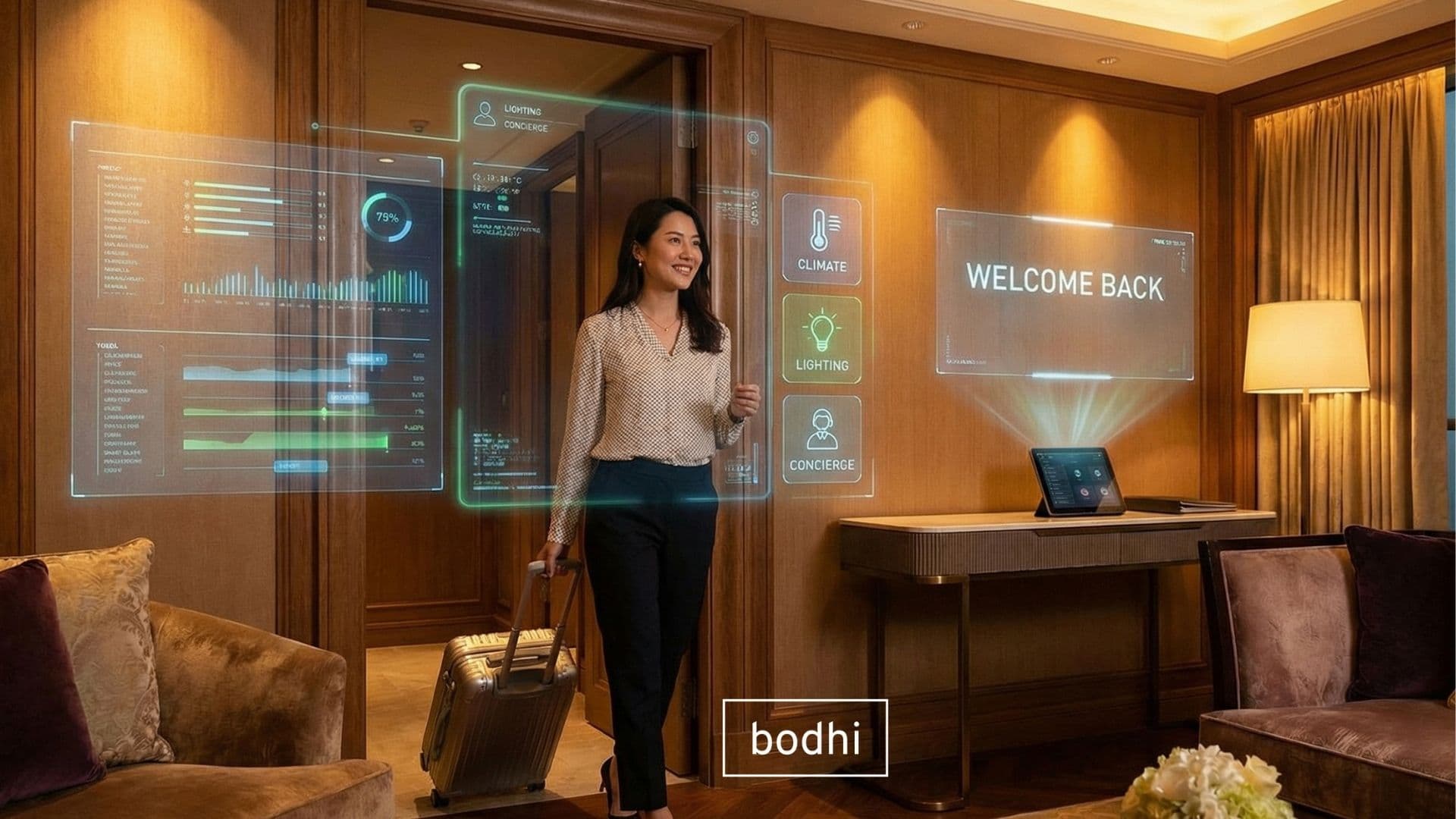
Beyond group revenue, the risk extends to asset value. Properties that are not infrastructure-ready for AI-assisted operations, smart room technology, and IoT-enabled sustainability systems will face a compounding disadvantage as those capabilities shift from differentiation to standard expectation.
Ron Pohl of WorldHotels made the sustainability case in operational terms:
"Sustainability has an ROI today. Before, it was just a good idea and the right thing to do. Now, from an operational perspective, it's critically important to the bottom line. Utilities will never go down, so what are we doing to reduce water, electricity, gas? How do we build smarter spaces?"
The answer to that question, if you ask SVP, depends on the existence of the ‘4th utility’ - cellular connectivity.
The AI Pressure Is Not a Future Consideration
The committee was consistent on this point: the infrastructure demands being placed on hotel networks by AI-driven applications are not arriving in five years. They are arriving now, in properties already deploying these tools.
AI-assisted check-in, housekeeping dispatch, concierge services, and maintenance workflows require flawless network performance not just in guest-facing areas but across every square foot of a property, hallways, pre-function spaces, back-of-house, loading docks. Coverage gaps that were previously inconsequential are now operational failures.
Page Petry, former CIO of Marriott Americas, articulated what the industry's investment trajectory requires:
"There's no other component in a hotel budget that plays across every single step of the guest journey - from the time the person books to check-in to check-out. We really need to be talking about it very differently - not so much that it has to work, but that it's fundamental to the success of a hotel. What AI is doing is going to force us there."
The Capital Planning Adjustment
The committee's recommendation for owners and developers operating in the current cycle was consistent across participants: connectivity infrastructure must enter the conversation at the design phase, not after construction is complete.
The investment logic is straightforward. Proactive installation during construction costs a fraction of post-completion remediation. The AI tools and smart room capabilities that will define competitive positioning over the next decade run on this infrastructure. And the revenue exposure created by inadequate connectivity in event spaces represents losses that may never appear in any report.
Molly Preston of Pyramid Hospitality Group, which oversees procurement decisions across 220 properties, described how her organization frames these decisions:
"What is the impact on the guest experience? How large is that impact, and what are the labor efficiencies we've created? Those are the two largest components. Cost is important, but those are the main guiding points."
This is precisely the gap Strategic Venue Partners was built to close. Specializing in connectivity infrastructure for luxury venues, SVP works with owners and developers at any stage, but critically the design and pre-construction phase - the moment of highest leverage and lowest cost - to ensure in-building cellular and Wi-Fi are treated as foundational infrastructure, not afterthoughts. In fact, SVP believes all venues should view cellular connectivity as the ‘4th utility’ - similar to water, gas, and electric, robust and always-on.The goal is connectivity that is invisible to the guest, reliable under any operating condition, and ready for the demands that AI and smart building technology will continue to place on it.
For properties already past the construction phase, SVP's approach to retrofit and remediation is built around minimizing disruption while delivering the coverage standard that the next decade of operations and guest devices will require.
SVP’s simple, proven infrastructure-as-a-service model enables hospitality venues to seamlessly incorporate critical connectivity infrastructure into their operating budgets — transforming what was once viewed as a costly cellular investment into a reliable, long-term asset that adds lasting value to the property.
About This Report
This article was produced from the ILHA Advisory Committee session held on May 20, 2026, in partnership with Strategic Venue Partners. The committee was convened to examine connectivity investment priorities among senior luxury hospitality operators, owners, and asset managers. A second advisory session is planned for approximately two months out.
To learn how Strategic Venue Partners works with luxury hotel owners and developers on connectivity infrastructure, visit strategicvenue.com