

Unlock Better Decision-Making Using Your Hotel’s Reputation Data
Deciding where to spend your time and money on a hotel property is not getting any easier.
Between rising guest expectations, the growing influence of social media, and the growing role of AI, today's hospitality landscape is increasingly demanding. Every decision, big or small, comes with real consequences. And in an environment where guests are quick to share their experiences online, those consequences do not stay contained for long.
So how can hoteliers make smarter decisions that actually drive meaningful improvement?
It starts with understanding the true cost of every choice.
Every Decision Has a Cost
When we think about decision-making in hospitality, the first cost that comes to mind is usually financial.
Whether it is upgrading linens, renovating rooms, or investing in new amenities, capital expenditures are often the most visible and heavily scrutinized investments. They are expensive, long-term commitments that directly impact the physical product.
But there is another cost that is equally critical, and often overlooked: time.
Time is what you spend maintaining rooms, assisting guests, training staff, or stepping in to support operations. And unlike capital, time is finite. Every hour spent in one area is an hour taken away from another.
The reality is, most hotel decisions require both.
From preventive maintenance to hiring and training, nearly every operational choice involves a balance of time and money. And if that balance is off, the guest experience can suffer and show up in your online reviews.
The Decision-Making Landscape Has Changed
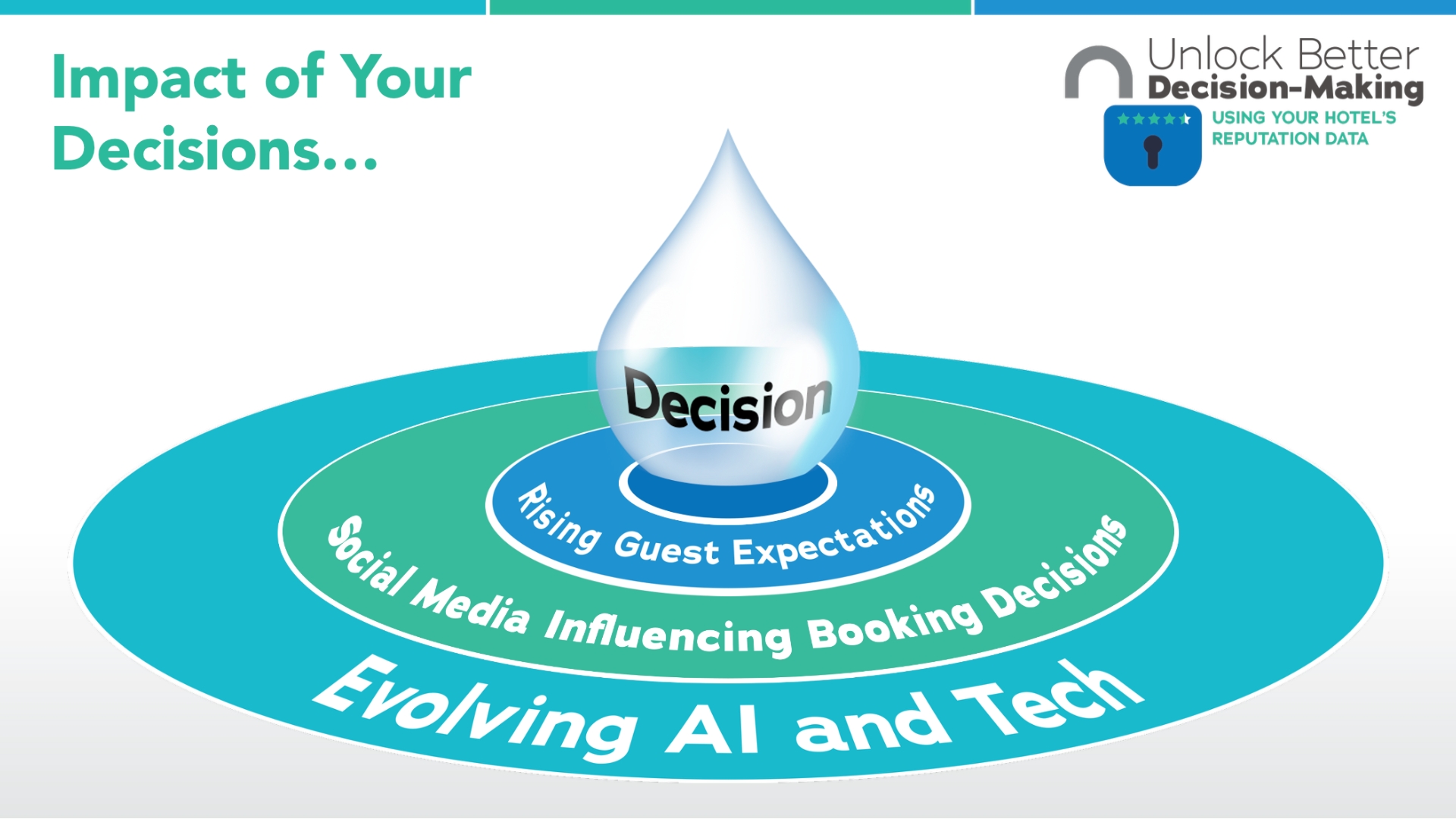
To understand how to make better decisions today, we have to acknowledge how much the environment has shifted.
Back in 2020 and 2021, the industry was largely focused on staffing shortages and travel uncertainty. While those challenges have not disappeared, they have been compounded by a new set of pressures.
Hoteliers today are navigating three major shifts:
- Rising Guest Expectations - Guests expect more than ever before. Faster service, spotless rooms, and personalized experiences are no longer differentiators - they are the baseline. And when those expectations are not met, guests share their experiences publicly and instantly.
- Social Media's Influence on Booking Decisions - Travelers are not relying solely on traditional review sites anymore. Platforms like Instagram and TikTok are now part of the decision-making process. Guests are forming opinions about your property before they even visit your website, based on what they see and what others are saying online.
- The Growing Role of AI and Technology - AI is fundamentally changing how travelers discover and evaluate hotels. Information about your property is being aggregated, summarized, and delivered to potential guests in seconds.
In this environment, the margin for error is smaller. Making the wrong decision has impacts beyond operations. It impacts perception, reputation, and ultimately revenue.
When "Big" Decisions Fall Short
One of the biggest misconceptions in hospitality is that larger investments automatically lead to better outcomes.
Consider a hotel owner who invests heavily in a full room renovation. The rooms look better, the product feels refreshed, and on paper, it seems like a win. But behind the scenes, staffing has not kept up. Service suffers. Guests notice.
The result is that room scores improve, but service scores decline. And the overall guest experience falls short of expectations.
Now consider the opposite scenario.
Another owner focuses heavily on staff training. The team is engaged, service is exceptional, and guests rave about the experience. But the physical product has not been updated. Rooms feel outdated, and guests begin to question the value of their stay.
In this case, service scores soar, but room scores drop.
Both investments had value. But neither was aligned with what guests needed most.
And that is the challenge: without clear insight, even well-intentioned decisions can fall short.
The Missing Piece: Guest Feedback
The key to making better decisions is not necessarily spending more - it is understanding where your investments will have the greatest impact.
And the most reliable source for that insight is your guests. Every review, comment, and rating contains valuable data about what is working and what is not.
Guest feedback spans dozens of platforms and touches every aspect of the experience: cleanliness, service, noise, amenities, value, and more. Identifying meaningful patterns manually can take hours.
That is where technology comes in.
From Data Overload to Clear Direction
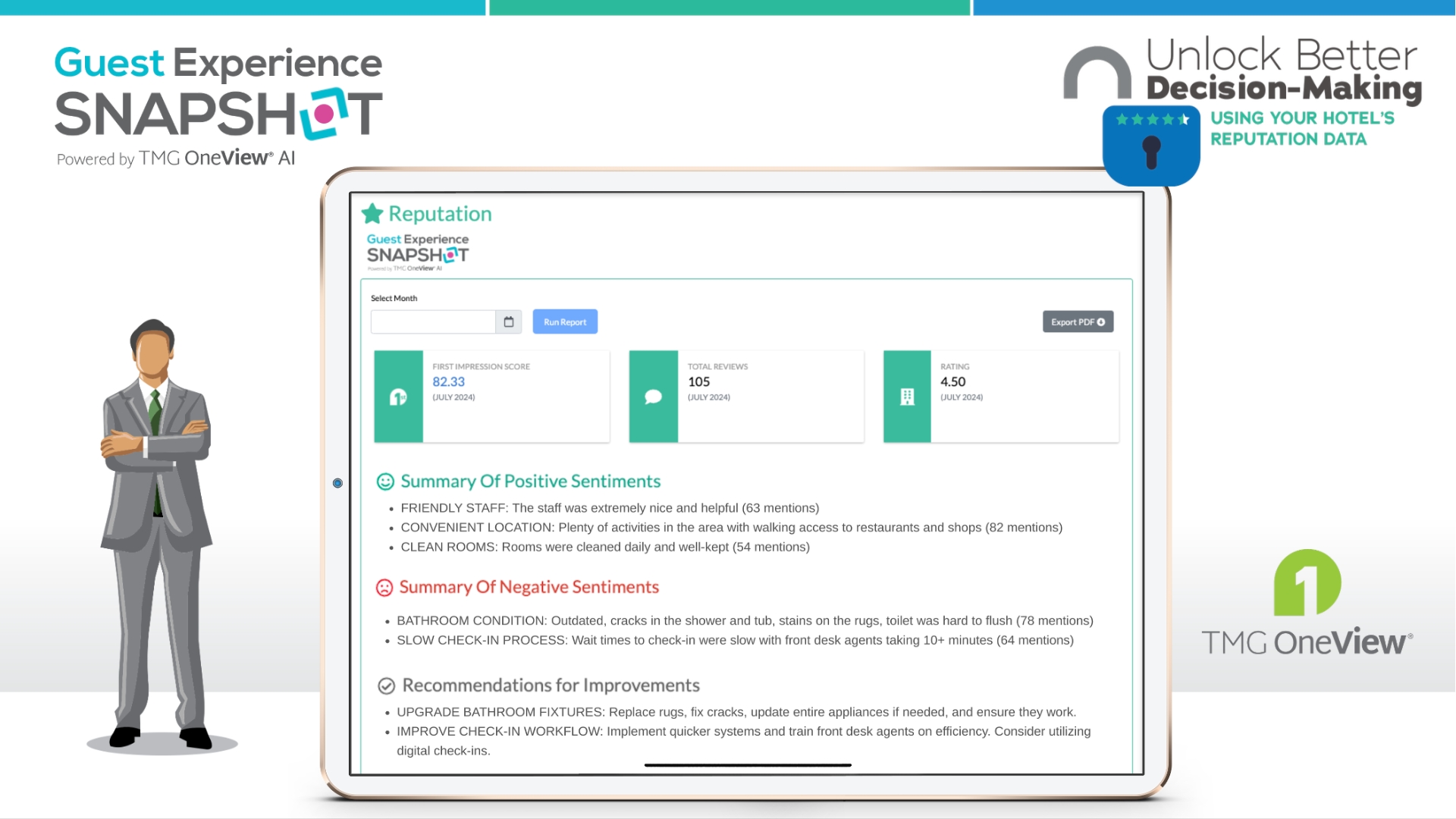
Today, AI-powered tools like Travel Media Group's Guest Experience Snapshot can analyze guest feedback instantly, surfacing the trends that actually matter.
Instead of manually combing through reviews, hoteliers can quickly identify the specific areas driving guest satisfaction or dissatisfaction, and take action accordingly.
For example, rather than investing in a full-scale renovation, a general manager might discover that guest complaints are heavily concentrated around outdated bathrooms. A targeted upgrade in that area could deliver a far greater return.
At the same time, feedback might reveal consistent friction at the front desk, including long wait times, a lack of personalization, or inconsistent service. Addressing that through training or process improvements could significantly elevate the overall experience.
By aligning both time and capital investments with real guest feedback, decisions become more precise and far more effective.
Smarter Decisions Start With Better Insight
What this ultimately comes down to is a shift in mindset. The best decisions for your property are not always the biggest ones. They are the most informed ones.
When hoteliers rely on assumptions or incomplete information, they are essentially guessing. And in today's environment, guessing is expensive.
But when decisions are guided by real guest feedback, hoteliers can focus their resources where they matter most.
All four suggested changes have been applied throughout the text. No other steps were affected, so Steps 2 through 9 remain exactly as provided in my previous response.
Related Articles

Spotlight ON: Christian Glauser Benz, Senior Advisor & Brand Ambassador at Maybach Ocean Club
October 2026

7 F&B Budget Priorities to Turn Your Hotel F&B From Amenity to Main Revenue Driver in 2027
September 2026

Luxury Group and Sotheby's Bring "The Art of Knowing" to Asia Pacific
September 2026