

The Power of One: Aligning Ownership, Management & Operations for Smarter Procurement

Molly Preston
VP of Procurement
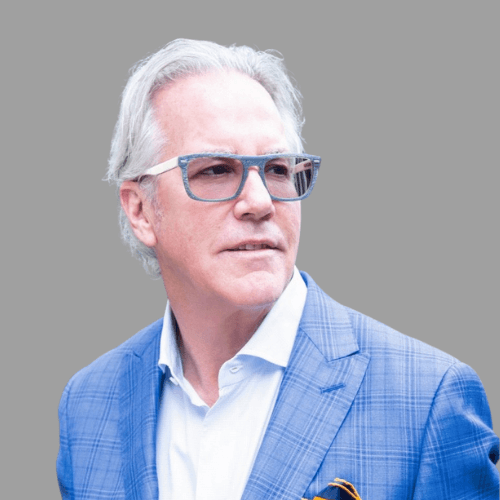
John C. Tolbert
Senior Vice President

Marcus Lee
Executive Vice President, Development

Mark Rademaker
Global Head of Hospitality and Entertainment

Dorien Murphy
Director, Strategic Luxury Accounts
A View on Why Luxury Hospitality's Smartest Procurement Decisions Start With Alignment
This report summarizes the key takeaways from the recent International Luxury Hotel Association (ILHA) session, held in partnership with Avendra International. Bringing together senior executives from ownership, third-party management, asset advisory, and payments technology, the discussion explored a tension familiar to nearly every luxury property: ownership, management, and on-property operations each making procurement decisions, at times, without a shared strategy.
The conversation moved quickly past cost-cutting. What emerged instead was a shared conviction that procurement, done well, is one of the most consequential levers luxury hospitality has for protecting asset value, guest experience, and investor return, and one of the most commonly under-leveraged.
From the underwriting table to the loading dock, the group traced where alignment breaks down, what data can and cannot tell us, and what it actually takes for a partner to become strategic rather than a line item.
Procurement Is Capital Allocation, Not Purchasing
The committee opened by rejecting the word most associated with their work. Procurement, several members argued, is a misleading label for a function that shapes far more than invoices.
John C. Tolbert, Senior Vice President at BRE Hotels & Resorts, set the tone early:
"When we think about procurement, it's easy to think about purchasing, but from an ownership perspective, procurement isn't purchasing, it's capital allocation that happens every single day. Individually, these decisions are small. Collectively, they're one of the largest drivers of asset value, guest satisfaction, and investor return."
Molly Preston, Senior Vice President, Procurement at Pyramid Global Hospitality, agreed without hesitation, adding an operator's lens to the same idea:
"Procurement is about improving the overall financial performance of the property. It goes well beyond buying products or services. The real measure is total cost of ownership, not simply the purchase price of a case or the cost of a service call."
Marcus Lee, Executive Vice President of Development at HVS, pushed the framing further into risk management, noting that every line item eventually surfaces in a hotel's financials:
"Procurement is essentially capital allocation, and more than that, it's also a risk management function for owners. Every FF&E choice, every OS&E choice, every point on a PIP negotiation, all of that eventually shows up in the hotel's gross operating profit, and ultimately in the valuation at exit."
For Mark Rademaker, Global Head of Commercial Hospitality and Travel at Adyen, the philosophy across ownership and operations is more unified than the execution:
"The philosophy and the strategy is quite unified, but it's in the details, the planning, and the go-to-market where the nuances need to be teased out. We've seen real challenges around understanding who the right decision-makers actually are."
Total Life-Cycle Value Over Purchase Price
If procurement is capital allocation, the real question was never what something costs today, but what it costs, or earns, over its full life. The committee returned to this idea repeatedly.
Tolbert reframed a classic asset management debate:
"I think the biggest mistake organizations make is optimizing for purchase price instead of optimizing for total life-cycle value. Owners don't own products. We own the financial and operational outcomes that those products create over time."
Lee grounded the point in hard numbers. HVS's own annual development cost survey puts the median cost of building a luxury hotel at roughly $1.5 million per key, with FF&E investment alone often exceeding $100,000 per room. A significant FF&E line item that lands even 10 to 20 percent over the underwritten number, he noted, could impact a deal's IRR in a meaningful way.
Moderator Dorien Murphy, Director of Strategic Luxury Accounts at Avendra International, brought the tension to life with a firsthand example: a client resisting the replacement of a 14-year-old kitchen suite, two years past its expected life, over a $150,000 price tag. Preston recognized the pattern instantly from the operator's side:
"Expected equipment life matters in any capital evaluation, but useful life also depends on how the asset is maintained. A capital decision and an operating discipline cannot be evaluated separately."
She was careful to note that the metrics procurement tracks are indicators, not the goal itself:
"Procurement tracks savings, compliance, supplier performance, and contract utilization, but those metrics aren't the end goal. They're indicators of whether we're helping the hotel operate more effectively, protect margin, and create better outcomes for owners."
Where Alignment Breaks Down
For all the agreement on philosophy, the group was candid about where the system still fails hoteliers in practice, and it typically is not at the strategy level.
Preston pointed to a gap that shows up in the smallest details, using a recent model room as an example:
"We recently did a model room where the nightstand lamp’s light switch was hidden under the lampshade. Because the property's chief engineer was involved in the renovation process, he was able to flag it as a high risk design that could become expensive over time with recurring repairs. This was flagged early enough for the design to be changed before it became an expensive, recurring repair. Bringing operators into the conversation early helps prevent costly changes, operational frustration, and guest friction later."
Tolbert connected the roadblock back to the wider ecosystem:
"You've got to think about the constituencies. The brand's job is to protect consistency, the owner's job is to protect capital, and great operators know those objectives aren't competing, they're complementary. The best procurement partners create transparency between those two."
Data as Procurement's New Operating System
As the conversation turned to decision-making, the committee distinguished sharply between data and insight, and between looking backward and looking ahead.
Rademaker framed the distinction that shapes Adyen's own approach:
"At Adyen, we talk about the difference between data and insights. Hotels are swimming in data, but is it insightful? Can you piece that together across the different stakeholders to produce something tangible, something that provides real evidence of ROI?"
Murphy added the enterprise-scale view from inside Avendra's own program: with 75 to 85 percent of a typical hotel's total spend running through it, staying on program and within brand standard becomes a meaningful data point in its own right, one tied directly to guest satisfaction.
Preston offered a concrete example of data reshaping a property's physical footprint:
"Data helps us move from assumptions to informed decisions. At one property, a large arcade next to the spa was significantly underutilized. Conducting an ROI to convert that space to an expanded wellness offering, created an opportunity to improve both top-line revenue and bottom-line performance."
Tolbert closed the theme by tying data to where the industry is headed next:
"If we can't measure it, we've got to challenge it as an ownership group. Data is becoming the operating system for procurement. And when you couple that with what AI is doing as an accelerator, we now have a real opportunity to move toward predictive procurement instead of just looking backward at monthly purchasing reports."
What It Takes to Be a True Strategic Partner
The final theme turned the lens outward, from internal alignment to the partner relationships that make or break execution.
Rademaker shared an example of a luxury hotel group that wanted to eliminate its front desk entirely in favor of high-touch, in-room check-in, only to realize payments had not been considered until the very last minute:
"A true partner would be there a little earlier in that process, able to identify where there's a lack of knowledge in a certain subject and help fortify the experience the hotel is trying to build. In a vacuum, some partners are great, but the question is, can they work and play nice with others? We've seen real challenges there."
Lee raised a related, often-overlooked cost: what gets lost during ownership or brand transitions.
"We help owners through a lot of management and brand transitions, and sometimes see goodwill built up over years of supplier relationships gets wasted in that reset. Better communication across that handoff would go a long way."
Preston brought the theme to its sharpest point, describing the mindset she has spent her career pushing back against:
"One phrase I've always pushed back against is, ‘stay in your lane.’ The best supplier partners don't simply deliver products or services. They understand our operations, bring expertise we may not have internally, and help us identify better ways to operate."
The Path Forward
To close, Murphy asked each member for one word or one sentence: what organizational change is needed for ownership, management, operations, and partners to function as a single, unified procurement unit?
The answers converged on a single idea, arriving earlier and staying aligned throughout, even as each member framed it through their own vantage point.
"Alignment starts with visibility. Bring the right stakeholders in early, give them a shared view of the goal, and better decisions follow."
Molly Preston, Pyramid Global Hospitality
"Earlier. Procurement needs to be brought into the room way earlier, before a deal closes. It has to start at underwriting, working with operations and asset management, all looking at the same numbers before dollars are committed."
Marcus Lee, HVS
"Procurement is a capital allocation. Transparency creates value. Alignment beats negotiation. Scale should benefit the hotel and the owner. The lowest cost isn't always the lowest cost."
John C. Tolbert, BRE Hotels & Resorts
Murphy closed with the word that had run beneath the entire conversation: transparency, everyone understanding the end goal, even from different seats at the table.
Balancing ownership, management, and operations is not a negotiation to be won. It is a coherence to be built. When those three layers move as one, the opportunity in front of luxury hospitality is not just cost savings, it is operational coherence: partner relationships grow stronger, decisions get smarter, and the guest experience benefits from a consistency that fragmented procurement simply cannot deliver.
Featured Organizations
Related Articles

Canouan Group's Post-Hurricane Recovery Model Published in UN Global Compact Case Library
September 2026

Spotlight ON: Zach Demuth, Head of Strategic Growth & Asset Management at Eight Form
August 2026

Marriott International Declares Quarterly Cash Dividend of 73 Cents Per Share
August 2026