The Zero-Labor Revenue Driver Luxury Spas Are Adding in 2026
A Guide for Hospitality Executives Evaluating Red Light Therapy as a Premium Wellness Amenity
Wellness is no longer an amenity category. It is a primary driver of property selection, guest loyalty, and ancillary revenue for the world's leading luxury hotels. According to the Global Wellness Institute, wellness tourism is growing at nearly twice the rate of general tourism, and guests arriving at luxury properties in 2026 are not just hoping for a spa. They are arriving with specific wellness intentions and comparing properties on their ability to deliver.
Red light therapy has moved decisively from boutique wellness trend to mainstream amenity expectation at the luxury tier. The question for hospitality executives is no longer whether to offer it, but how to evaluate the equipment correctly and ensure the investment performs.
The Revenue Case
Red light therapy sessions are typically priced between $75 and $150 at luxury properties, require no licensed practitioner to administer, and run between 10 and 20 minutes per guest. That throughput of two guests per hour, per unit, translates to a straightforward revenue model. At $100 per session with six sessions per day, a single unit generates roughly $180,000 in annual revenue. At that rate, the equipment pays for itself within months and produces high-margin incremental revenue for the life of the asset.
For properties with an established local membership base, red light therapy creates a compelling subscription model. A monthly wellness membership priced between $300 and $500 gives guests a reason to visit two to three times per week, far beyond the cadence of traditional spa booking. That frequency compounds. Guests who are in your facility regularly spend on ancillary services, retail, and treatment upgrades at meaningfully higher rates than occasional visitors. The result is a lift in annual revenue per customer that extends well beyond the therapy session itself.
Critically, it requires no additional labor. Staff check the guest in, initiate the session, and return when it ends. There is no massage therapist, no esthetician, no scheduling complexity. For properties looking to expand their wellness offering without expanding their labor cost, few amenities present a more straightforward return.
What to Evaluate Before You Buy
Not all commercial red light therapy systems perform equally, and for a $50,000-plus purchase, the evaluation needs to go deeper than a spec sheet.
Irradiance at the contact surface
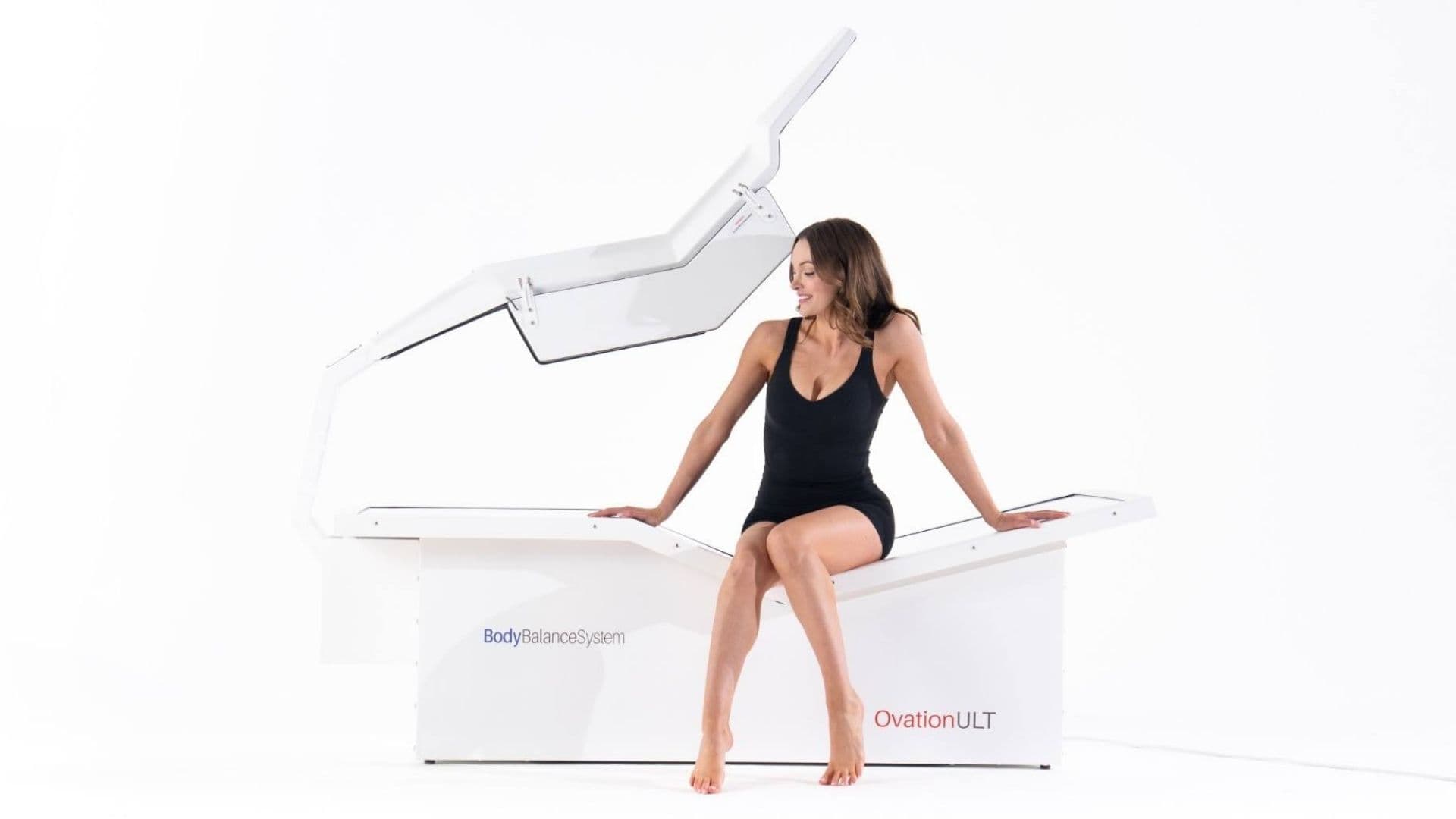
Therapeutic benefit depends on the light reaching the body at sufficient intensity. Irradiance degrades significantly with distance, which means a system must place its diodes within approximately three inches of the guest's body to deliver meaningful results. Look for contoured, zero-gravity designs that maintain consistent proximity across the full body and confirm the advertised irradiance: 65 to 75 mW/cm² is the meaningful range, measured at the actual contact surface, not from a fixed point above it.
Dual wavelengths, efficient sessions
Effective systems deliver red (635nm) and near-infrared (850nm) wavelengths simultaneously. This combination supports temporary relief of minor muscle and joint discomfort and promotes relaxation without requiring staff to manage separate settings or extend session times. Shorter, more effective sessions mean higher throughput and a better guest experience.
Infrastructure requirements
A unit requiring a dedicated 240V industrial circuit introduces electrician fees, panel upgrades, and permit timelines that can add thousands to your total cost before a single guest arrives. Systems engineered for standard 120V service eliminate that friction entirely and can be positioned anywhere in your spa or wellness floor without infrastructure investment.
Regulatory compliance
For a commercial wellness device operating in your facility, two credentials are non-negotiable. First, confirm the manufacturer holds verifiable FDA establishment registration with a product code ILY listing — this is publicly searchable at accessdata.fda.gov and takes under ten minutes to verify. Second, confirm the finished unit carries full NRTL certification from an OSHA-recognized testing laboratory such as UL, ETL, or SGS. Note the distinction: a unit containing "UL recognized" internal components is not the same as a fully NRTL-listed finished product. When institutional buyers, insurers, or state inspectors ask, you need the latter.
Total cost of ownership
The purchase price is one line item. Downtime, repair costs, and support responsiveness are the variables that determine actual ROI over a five-year asset life. A comprehensive parts-and-labor warranty of at least five years is the standard to expect. Ask specifically what the response time is for service calls and whether loaner units are available during repairs.
The Luxury Positioning Advantage
There is a strategic dimension to this category that goes beyond the revenue model. Luxury hotel guests who discover red light therapy at your property are highly likely to seek it out again, and to associate the experience with your brand. In a category where differentiation increasingly comes from wellness programming rather than physical product, being the property that introduced a guest to something meaningful is a retention asset.
The guests arriving at ILHA member properties are not looking for the same experience they can find anywhere. They are looking for what's next, delivered with the standard they expect and the simplicity that keeps them coming back.
About Body Balance System
Body Balance System manufactures the OvationULT commercial red light therapy bed in Las Vegas, Nevada. The OvationULT carries FDA establishment registration #3010627475 under product code ILY and SGS North America NRTL certification.