
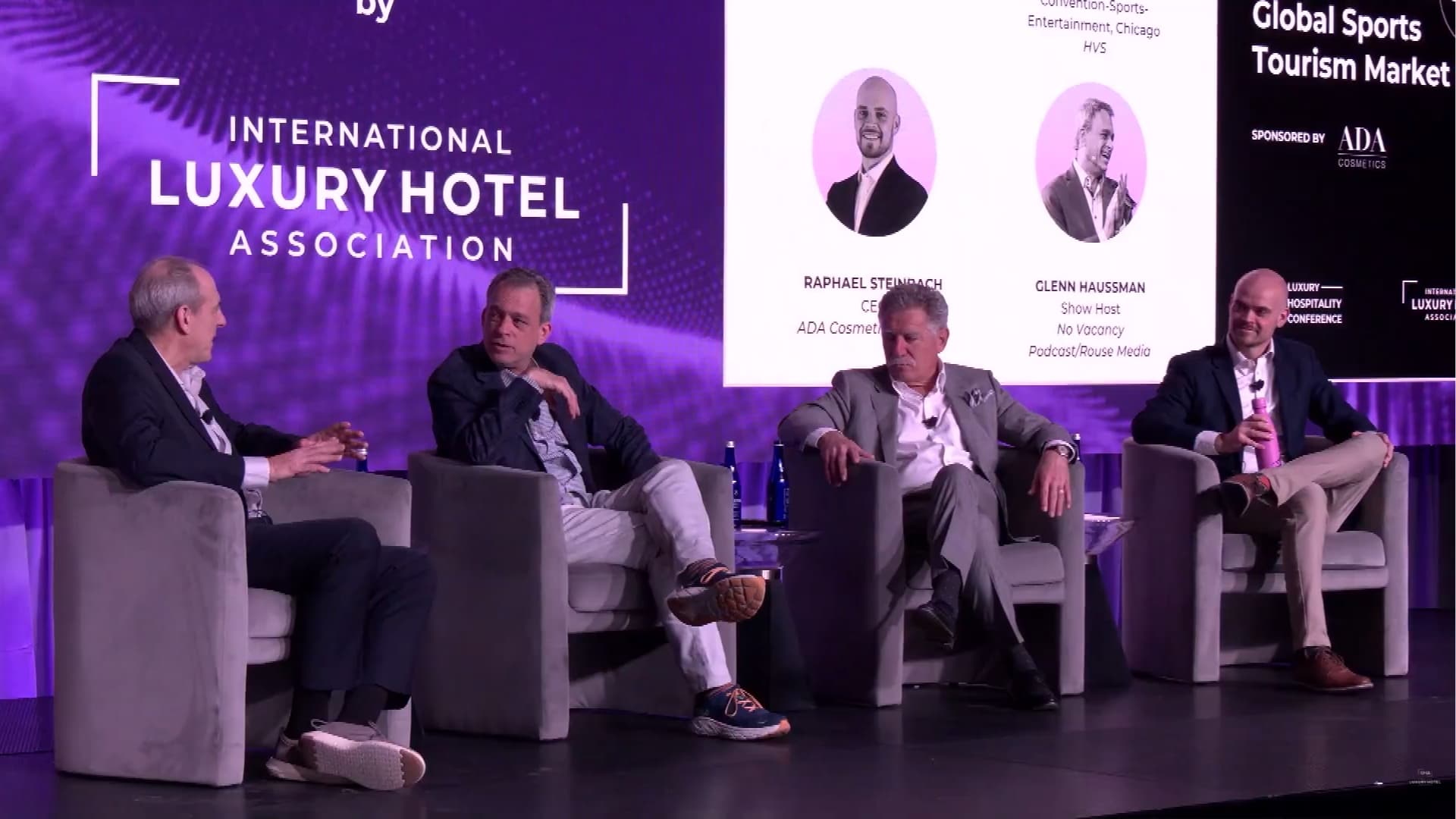
Tapping Into the Global Sports Tourism Market
How Luxury Hospitality Can Win in the Experience Economy - Presented by ILHA Sponsor ADA Cosmetics
The conversation began not with highlight reels or stadium renderings, but with a candid reality check. Annie Steighner, Vice President, Business Development & Partnerships, ADA Cosmetics, opening the Sports Tourism panel on behalf of ADA Cosmetics, set the tone with a message that was equal parts provocative and practical - reminding the room that experience-driven hospitality doesn’t begin on game day; it starts with operational decisions made long before the guest arrives. Drawing from deep roots in operations and procurement, Steighner introduced the audience to the implications of MoCRA (the Modernization of Cosmetics Regulation Act), reframing bulk amenities, guest safety, sustainability, and compliance as interconnected pillars of trust. Her message was clear: today’s luxury guest experience is shaped as much by what happens behind the scenes as by what happens in the stands - and the smartest brands are solving risk, labor, sustainability, and storytelling in one move. With that foundation laid, the panel shifted its focus to the broader opportunity at hand: how sports tourism is redefining experiential travel and opening new pathways for growth.
If there was one message that echoed clearly through the room at International Luxury Hotel Association’s INSPIRE Las Vegas, it was this: sports are no longer just events - they are ecosystems of experience. And for luxury hospitality, that shift represents one of the most powerful growth opportunities of the decade.
In a lively, wide-ranging session sponsored by ADA Cosmetics, industry leaders gathered to unpack how hotels can tap into the rapidly expanding global sports tourism market - not just by hosting fans, but by aligning with the deeper cultural, experiential, and economic forces reshaping travel itself.
Moderated by live-music insider Glenn Haussman of the No Vacancy Podcast (who cheerfully admitted he “knows nothing about sports”), the panel brought together an unlikely but compelling mix of expertise:
- Tom Hazinski, Managing Director, Convention, Sports & Entertainment, HVS
- Walter Isenberg, CEO, Sage Hospitality
- Raphael Steinbach, CEO, ADA Cosmetics America
What followed was a masterclass in why sports tourism matters - and how luxury hotels can engage it intelligently, sustainably, and profitably.
From Stuff to Stories: Why Sports Matter More Than Ever
Haussman set the tone early, framing sports within the broader shift from a material economy to an experiential economy. Guests don’t need more things. They want moments, memories, and meaning - and sports deliver all three at scale.
Nowhere is that more visible than Las Vegas. Once defined primarily by gaming, the city has doubled down on headliners, arenas, franchises, and global sporting events, transforming itself into a year-round experience destination. But as the panel emphasized, this trend is not unique to Vegas. It’s happening across cities, regions, and even rural destinations worldwide.
“Sports tourism is growing everywhere,” Isenberg noted. “And it’s no longer just football, baseball, basketball, and hockey.”
Women’s soccer. The WNBA. Pickleball. Marathons. Youth tournaments. Formula 1. College sports. The definition of “sports travel” has expanded dramatically - and so has the opportunity for hotels willing to think beyond the obvious.
Not All Sports Are Created Equal - and That’s the Opportunity
Hazinski broke down sports tourism demand into distinct layers, from mega-events like the Super Bowl, FIFA World Cup, and Final Four, to the steady drumbeat of league play, tournaments, and niche competitions that fill calendars year-round.
The data is telling:
- The NFL boasts 176 million fans, with 50 million traveling to attend games.
- The WNBA, while smaller in overall fan base, generates an outsized percentage of travel.
- Golf attracts fewer travelers overall - but delivers the wealthiest sports travelers.
For hoteliers, the takeaway is clear: sports tourism isn’t about chasing one big event - it’s about understanding which sports align with your market, your brand, and your guest profile.
“Putting all your eggs in the NFL basket doesn’t make sense,” Haussman observed. “There are only so many games. The real win is diversification.”
The Rise of Sports Districts and Year-Round Demand
One of the session’s most compelling themes was the evolution of sports venues themselves - and what that means for hospitality.
Isenberg and Hazinski pointed to developments like Battery Atlanta, McGregor Square in Denver, and mixed-use projects emerging across the U.S. as proof that stadiums are no longer standalone assets surrounded by parking lots. They are anchors for 365-day destinations, blending hotels, residential, retail, dining, wellness, and entertainment.
“The question is no longer how you monetize 80 games,” Isenberg said. “It’s how you monetize the other 280 days.”
Luxury hotels adjacent to these districts benefit not only from sports fans, but from concerts, festivals, dining traffic, community events, and everyday urban life. Even smaller-scale events - a concert night, a touring show, a midweek tournament - can drive meaningful revenue when inventory needs are modest and pricing is smart.
In some cases, Isenberg noted, Taylor Swift concerts have generated more hotel revenue than the Super Bowl.
Where ADA Cosmetics Fits In: Experience, Sustainability, and Sports
From ADA Cosmetics’ perspective, sports tourism isn’t just a demand driver - it’s a powerful platform for values-driven storytelling.
Steinbach shared how ADA’s parent company, BWT (Best Water Technology), sponsors more than 3,000 athletes globally to reach diverse audiences where they already are. Sports, he explained, carry “positive, transformative power,” making them ideal for messaging around sustainability, wellness, and responsible consumption - core to ADA’s mission in hospitality.
Whether it’s eliminating plastic bottles, designing better in-room experiences, or supporting long-term community development, the alignment between sports, sustainability, and experiential travel is only getting stronger.
“Hotels are starting to make their own luck,” Steinbach said, pointing to destinations that extend beyond seasonal sports by layering in biking, wellness, outdoor activities, and community engagement.
Participation, Not Just Spectating
A recurring insight throughout the session: the future of sports tourism isn’t only about watching - it’s about participating.
Youth sports, amateur tournaments, marathons, pro-ams, and wellness-driven activities may not command luxury rates on their own, but they create market compression, lengthen stays, and fill gaps around larger events.
Smart hotels are responding with:
- Curated packages tied to events
- Transportation and logistics that remove friction
- Recovery amenities (spas, wellness, nutrition)
- Partnerships with teams, leagues, and promoters
The most successful strategies, the panel agreed, look at sports tourism holistically - from rate management to programming to brand alignment.
A Look Ahead: College Sports and the Next Wave
One of the most forward-looking moments came when Hazinski highlighted the college sports market as a major emerging opportunity. With NIL (Name, Image, Likeness) reshaping collegiate athletics, universities are under pressure to generate new revenue - and that means upgraded venues, premium experiences, and hospitality partnerships that increasingly resemble professional sports models.
For developers and operators, this signals another wave of sports-adjacent hotel demand - often tied to new convention centers, stadium redevelopments, and mixed-use campuses.
Final Word: Sports as the Ultimate Experience Economy
As the session wrapped, the panelists returned to a shared conclusion: sports tourism sits at the intersection of experience, emotion, and human connection - exactly where luxury hospitality thrives.
AI may commoditize many aspects of travel, Isenberg noted, but live events, shared moments, and real experiences are where the real value - and the real margins - will live.
For luxury hotels, the path forward isn’t about chasing every mega-event. It’s about understanding your market, building relationships, investing for the long term, and creating experiences that resonate far beyond game day.
And as this ILHA INSPIRE session made clear, with partners like ADA Cosmetics helping the industry think more sustainably and holistically, sports tourism isn’t just a trend - it’s a strategic pillar of hospitality’s future.
Featured Organizations

Related Articles
7 F&B Budget Priorities to Turn Your Hotel F&B From Amenity to Main Revenue Driver in 2027
September 2026
Luxury Group and Sotheby's Bring "The Art of Knowing" to Asia Pacific
September 2026
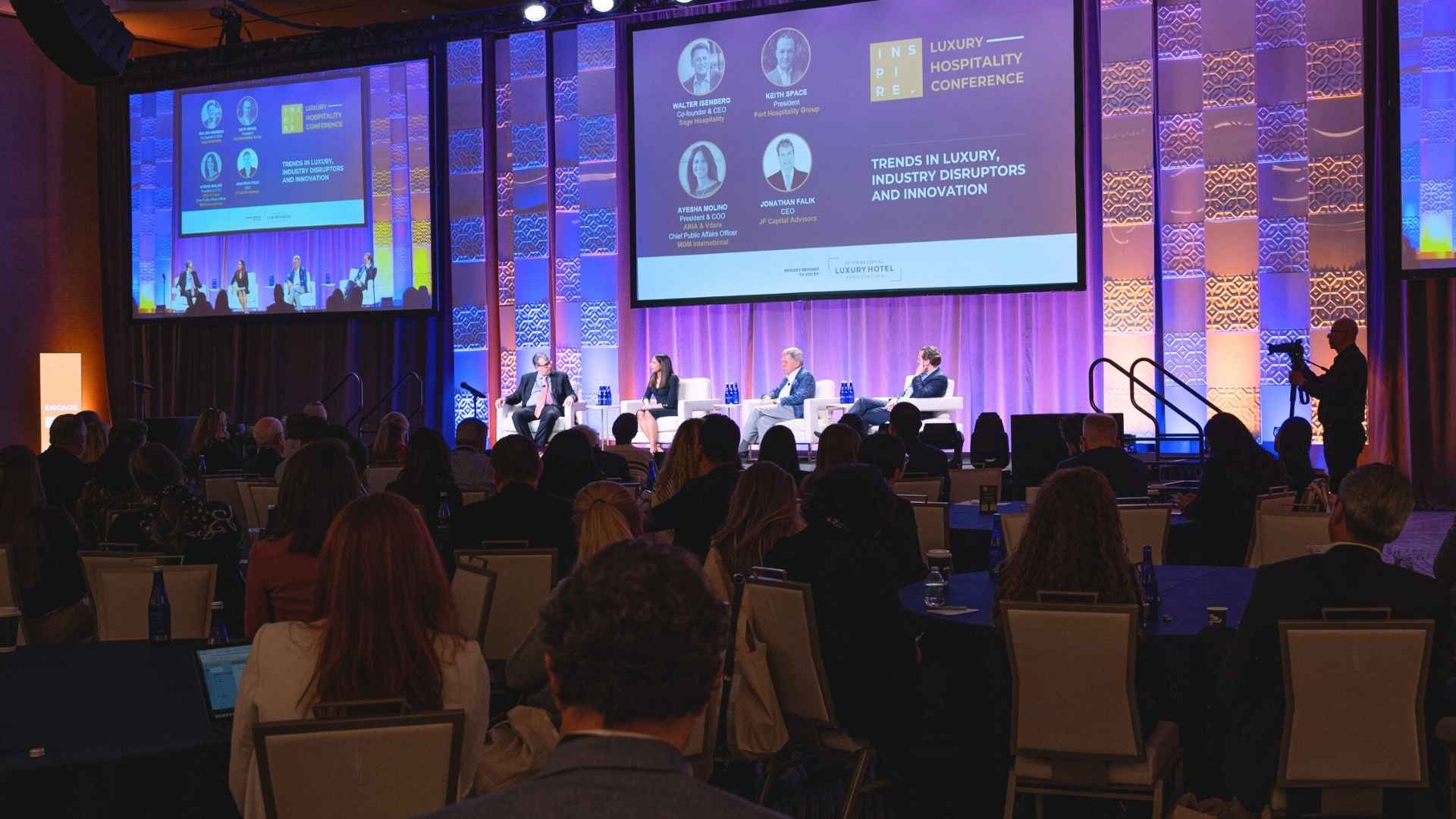
Connection Is the New Luxury: INSPIRE 2026 Adds Culture, Wellness and AI to Its Agenda
September 2026