
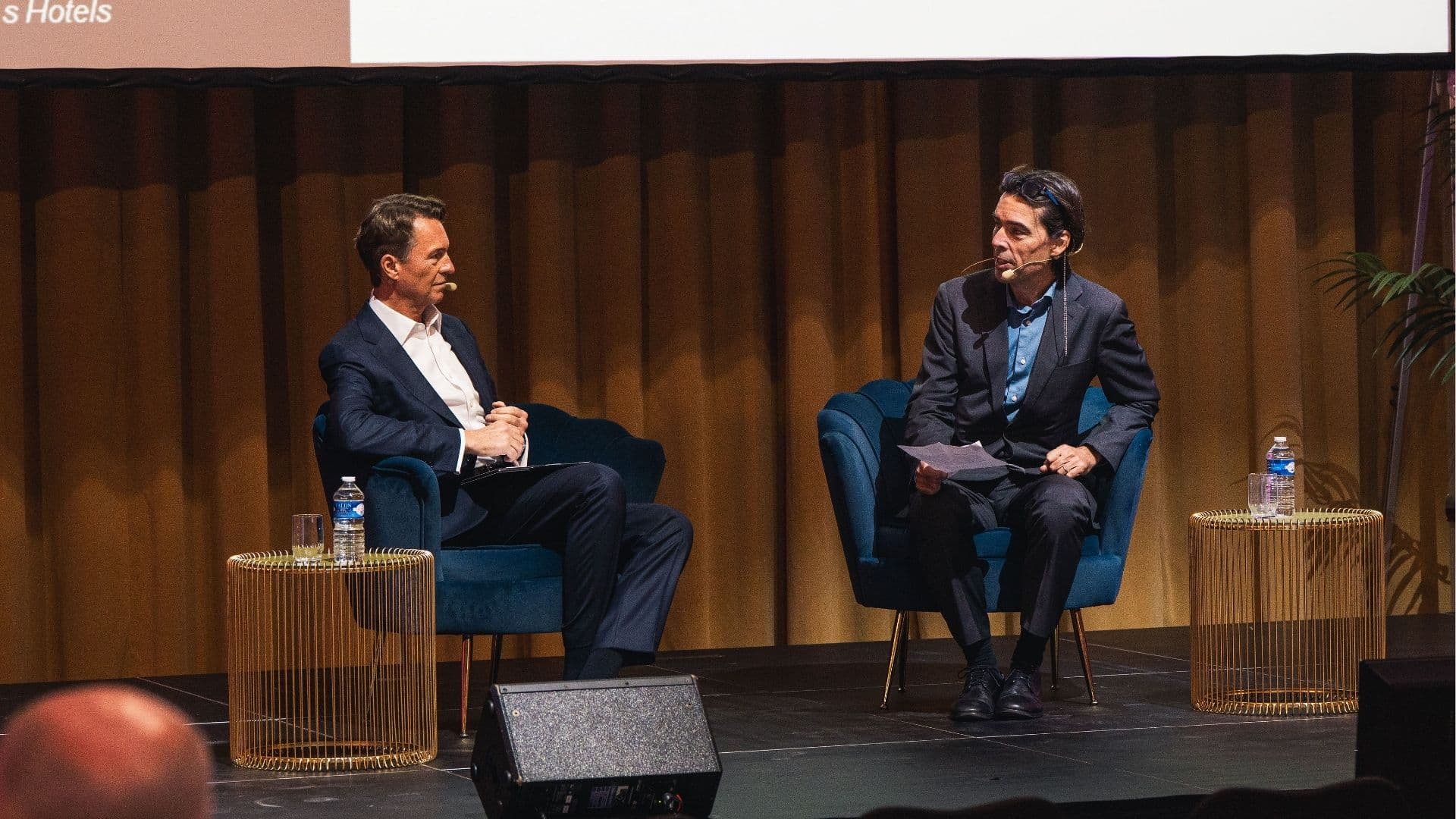
Tom Rowntree on the New Rules of Luxury Hospitality
Luxury hospitality is becoming more experience-led, more expressive, and more emotionally driven. According to Tom Rowntree, Vice President of Luxury & Lifestyle Brands at IHG Hotels & Resorts, that shift is reshaping how brands grow, how hotels are designed, and how guests connect with the places they stay.
In a recent conversation with Terence Baker of STR, Rowntree outlined how IHG is approaching the next phase of luxury growth - one defined not by rapid expansion, but by deliberate brand positioning, stronger emotional connections with guests, and a deeper sense of individuality in each property.
For owners, operators, and developers, the message was clear: the luxury traveler has changed, and the brands that succeed will be those that evolve with them.
Growing luxury with discipline
IHG’s luxury portfolio has expanded significantly in recent years, but Rowntree emphasizes that growth is intentional rather than opportunistic. Each brand is designed to occupy a specific position within the broader ecosystem, serving a distinct audience and experience.
Rather than chasing scale alone, the company is focused on ensuring that expansion happens in the right markets and in a way that protects each brand’s identity.
“Each of our luxury brands has a very clear role to play. We’re deliberate about where they grow, how they grow, and making sure they stay true to their DNA.”
- Tom Rowntree, IHG Hotels & Resorts
That approach reflects a broader shift across luxury hospitality. In a segment where authenticity and reputation carry enormous weight, growth that feels forced or inconsistent can quickly dilute brand value.
Protecting the identity of luxury brands
The challenge becomes even more complex when acquisitions enter the picture.
For IHG, integrating brands such as Six Senses has required a careful balance: providing the support of a global hospitality company while protecting the philosophy and culture that made the brand successful in the first place.
Rowntree describes the process less as assimilation and more as stewardship. The goal is not to standardize the brand, but to reinforce what makes it distinctive.
That means allowing each brand to maintain its own design philosophy, guest experience, and cultural identity while benefiting from IHG’s global distribution, systems, and operational expertise.
The rise of the collection model
One of the most important developments in luxury hospitality, Rowntree suggests, is the growing influence of collection brands.
These brands sit at the intersection of two powerful forces shaping the industry: owners who want more creative freedom, and guests who increasingly seek authentic, place-driven experiences.
“We’re seeing a clear shift toward guests seeking unique, individual experiences. Our role is to nurture that sense of expression while using the scale and capability of IHG to bring it to life.”
- Tom Rowntree, IHG Hotels & Resorts
Collection brands allow properties to maintain their own personality and storytelling while still tapping into the global reach and resources of a major hotel company. For historic buildings, conversions, and distinctive destination hotels, the model has become particularly compelling.
Experience is replacing loyalty as the driver
Another major shift in luxury hospitality is the changing psychology of the guest.
Traditional loyalty programs remain important, but Rowntree notes that ultra-luxury travelers are increasingly guided by the occasion rather than a single brand affiliation. A guest may choose one brand for a city stay, another for a wellness retreat, and another for a multigenerational vacation.
In other words, loyalty is becoming more fluid.
Rather than focusing purely on points or status, luxury brands must create experiences that feel emotionally meaningful and contextually relevant to each trip.
Emotional connection drives performance
For Rowntree, that emotional dimension is not simply philosophical - it is commercial.
Hotels that build stronger emotional bonds with guests ultimately outperform those that focus solely on operational consistency. Memories, feelings, and personal resonance play a powerful role in driving repeat visits and brand advocacy.
“At its heart, our industry is about creating emotions and creating memories. The brands that succeed are the ones that build a deep emotional connection with their guests - profitability follows from that.”
- Tom Rowntree, IHG Hotels & Resorts
That principle, he suggests, sits at the heart of luxury hospitality. The most successful brands are those that deliver experiences that guests remember long after the stay itself.
Design must reflect place
Design is another area where luxury expectations are evolving. Rowntree believes architecture and interiors should reflect the culture, history, and spirit of the destination rather than simply reproducing a global template.
Each brand may have its own design philosophy, but the most compelling properties interpret those principles through the lens of place.
That approach allows hotels to feel authentic rather than interchangeable - something increasingly important to luxury travelers who want to feel connected to the destination.
Wellness expands beyond the spa
The evolution of wellness is also reshaping luxury hospitality.
Once centered primarily around spas and treatments, wellness today spans a much broader lifestyle conversation: mental health, longevity, sleep, family travel, and personal balance.
Brands like Six Senses have played a major role in pushing this transformation forward, demonstrating how wellness can become a core element of the guest experience rather than an ancillary offering.
Rowntree believes the shift reflects wider societal changes. Guests are not just seeking indulgence; they are looking for travel experiences that help them reset, reconnect, and restore.
A resilient luxury traveler
Despite shifts in how people travel, demand for luxury experiences remains strong.
Travel patterns have evolved since the pandemic, with more blending of business and leisure, more multigenerational trips, and greater emphasis on wellbeing. Yet the fundamental desire for meaningful travel experiences has only intensified.
Luxury hotels, Rowntree suggests, are well positioned to respond to those changes - particularly when they deliver the emotional resonance, individuality, and authenticity that today’s guests increasingly value.
In the end, the future of luxury hospitality may not be defined by scale alone, but by how well brands create experiences that feel personal, memorable, and deeply connected to the places where they exist.
Featured Organizations


Related Articles
7 F&B Budget Priorities to Turn Your Hotel F&B From Amenity to Main Revenue Driver in 2027
September 2026

Luxury Group and Sotheby's Bring "The Art of Knowing" to Asia Pacific
September 2026

Connection Is the New Luxury: INSPIRE 2026 Adds Culture, Wellness and AI to Its Agenda
September 2026